

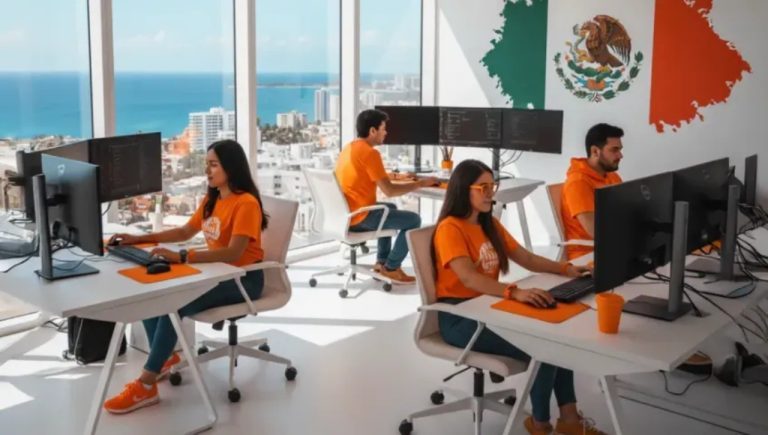
Something has changed about where developers choose to live. The traditional tech hubs (San Francisco, Austin, Seattle) still pull talent, but a growing number of engineers have quietly stopped asking which city has the best job density and started asking which city makes their actual life better. For some of them, the answer turns out to be a 500-year-old colonial city in central Mexico.
San Miguel de Allende was already a well-known destination for artists, retirees, and American expats long before remote work made relocation a realistic option for developers. Those buying property there frequently work with international agencies; Berkshire Hathaway has had an established presence in the city’s real estate market for years. For anyone thinking seriously about the move, reading the Architectural Guide to San Miguel de Allende early on gives a concrete sense of what each neighborhood looks like and how the city’s colonial layout shapes day-to-day navigation.
How the Internet Actually Performs

Fiber-optic service has reached large parts of San Miguel de Allende, and the providers most developers end up with are Izzi and Telmex. Download speeds in residential areas typically sit between 50 and 200 Mbps, which covers video calls, CI/CD pipelines, and remote desktop sessions without issue. That said, reliability varies by neighborhood and building: older colonial-era structures can make cable routing difficult, and some landlords still run older DSL-era infrastructure that has not been upgraded. Asking to test the connection before signing a lease is standard practice here, not an unusual request.
A dozen or so coworking spaces scattered around the centro and outlying neighborhoods offer backup. Nest Coworking near Parque Juárez charges around $120 USD per month for a hot desk and has been reliable enough that some developers use it as their primary workspace rather than bothering with a home setup at all. The wireless at most cafés in the centro is functional but inconsistent; a cellular backup on Telcel’s network is worth having for the occasional dead afternoon.
What Housing Costs Look Like in Practice

A furnished one-bedroom apartment in a residential neighborhood like Guadiana or San Antonio runs $600 to $900 USD per month. Closer to the centro histórico, prices go up: a two-bedroom with a terrace and good natural light regularly lists at $1,400 to $2,000 USD, which still compares favorably to equivalent space in most US cities. The short-term rental market has absorbed a significant share of available units, which has pushed long-term rental inventory down and encouraged landlords toward slightly shorter lease terms.
Unfurnished long-term rentals are rarer but cheaper. Locking in a 12-month unfurnished lease at $500 to $700 USD for a two-bedroom is possible in neighborhoods like Guadalupe or Aurora if you are willing to look beyond the immediate centro. Utilities add relatively little: water, electricity, and gas for a standard one-bedroom rarely exceed $80 to $100 combined, though power bills spike during brief hot spells in April and May if you are running air conditioning.
Running Your Development Work from Mexico

Working as a freelancer or contractor from Mexico involves a few decisions that are easy to put off and annoying to untangle later. As a US citizen or resident, you are still required to file US taxes on foreign income; nothing about living in Mexico changes your IRS obligations. Some developers register US LLCs while living abroad to maintain a clean invoicing structure, a setup that the U.S. Small Business Administration’s guide to doing business abroad addresses in more detail.
On the Mexican side, short-stay visitors are technically not authorized to work or earn Mexican-sourced income, though this is rarely enforced for remote workers receiving US-denominated payments from foreign clients. Those who stay longer and want legal clarity apply for a Temporary Resident visa, which has no work restriction. Most developers working remotely for non-Mexican clients choose this path after their first year.
Banking deserves attention early. Getting a Mexican bank account requires a Temporary Resident card, which means running everything through US accounts and making conversions via Wise or Revolut for a while. That works fine practically but adds a few minutes to every utility payment.
The Residency Path for Long-Term Stays

A Temporary Resident visa is the standard option for developers planning to stay beyond a tourist card’s 180-day ceiling. You apply through a Mexican consulate in the US before your departure; the process requires proving income (typically $2,700 or more per month from savings or documentation over the last 12 months) and providing a handful of notarized documents. Approved applicants receive a one-year visa initially, renewable up to four years before permanent residency becomes an option.
Before traveling, reviewing Mexico’s entry and safety information from the U.S. State Department is worth the time. It covers embassy registration, local emergency contacts, and specific advisories by state. Guanajuato, the state San Miguel falls within, has carried a lower advisory level than much of northern Mexico.
One thing that catches people: the Temporary Resident visa is not issued at the airport on arrival. You need to get it stamped by INM within 30 days of entering Mexico, at your local immigration office. Missing that window can complicate renewals considerably. Scheduling the appointment in the first week after arrival rather than leaving it until day 28 is advice you will hear from nearly every expat who went through the process.
Navigating the Property Market
Foreign nationals can own property in Mexico’s interior without the bank trust required in coastal or border zones. San Miguel de Allende sits well within the interior, so buying there is structurally simpler than purchasing in Puerto Vallarta or Baja. That said, the transaction process differs from US home purchases in ways worth understanding: closing costs run 4 to 8 percent of the property value, title insurance is less standardized, and the timeline from accepted offer to close often stretches 60 to 90 days.
The market has been competitive. Properties in the centro histórico and in neighborhoods like Atascadero have appreciated meaningfully over the past decade, driven by expat demand and the city’s growing profile as a cultural destination. Developers who came intending to rent and eventually bought have generally found that timing worked out; those waiting for prices to dip have been waiting longer than expected.
Working with a buyer’s agent who specializes in foreign purchasers is worth the commission. The paperwork arrives in Spanish, the notario process differs from anything in the US system, and having someone who has closed 30 of these transactions makes a material difference in the experience.